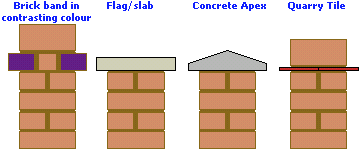
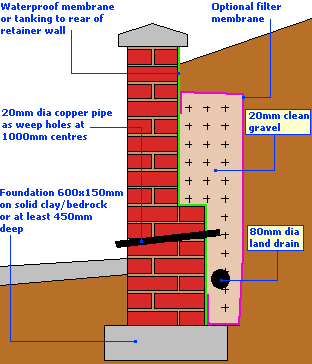
Bricklaying is a skilled trade that takes many years to master. Bricks are laid in courses - on a bed of mortar, with a taut string line used as a guide to line & level. The horizontal joint is the bed joint; the vertical joints are called perps. | |
| The ends of walls are built first, with the level & verticality of the bricks checked as the corners are raised. The gauging is also checked, to ensure that 4 courses measures 300mm. The ends are typically "Racked Back" which allows successive courses to be laid direct to the string line without having to continually check your work with a level. | |
The bed mortar is laid out & shaped to seat the bricks. The end of the brick to be laid is buttered with mortar & then pushed against the preceding brick, squeezing the mortar to a width of about 10mm. The brick is tapped down to level with the heel or handle of the trowel, any surplus mortar extruded from the bed or the perp end is scraped off with the trowel, then the process is repeated with the next brick. At the completion of each course, the line is moved up to the next course at the corners.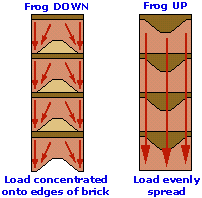 | |
| Frogged or perforated brickwork should always be covered over if left unfinished for any period when rain is likely, to prevent the frogs or perforations filling with water which would make a mess of the bed mortar when the bricklaying starts again. Pointing StylesPointing ensures the bed joints & perp ends are properly filled with mortar. Pointing is usually done an hour or so after the bricks have been laid,just long enough for the mortar to stiffen but not so long that it has become`s unworkable. The unpointed joints can be topped up with fresh mortar if they are not quite full, before tooling to the required style.The most common pointing styles are shown below. The Weatherstruck & Flush type`s are formed with the blade of a trowel. The Bucket Handle profile is formed with a semi-circular section jointing bar, the Recess type is created with a joint raker or chariot. Tooled joints offer better resistance to rain penetration. 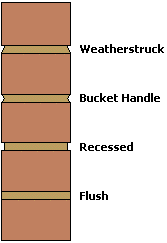 Other topics Brick bonds Brick types Copings Retaining walls Pointing Mixing mortar  |
Kings Heath Builders Directory